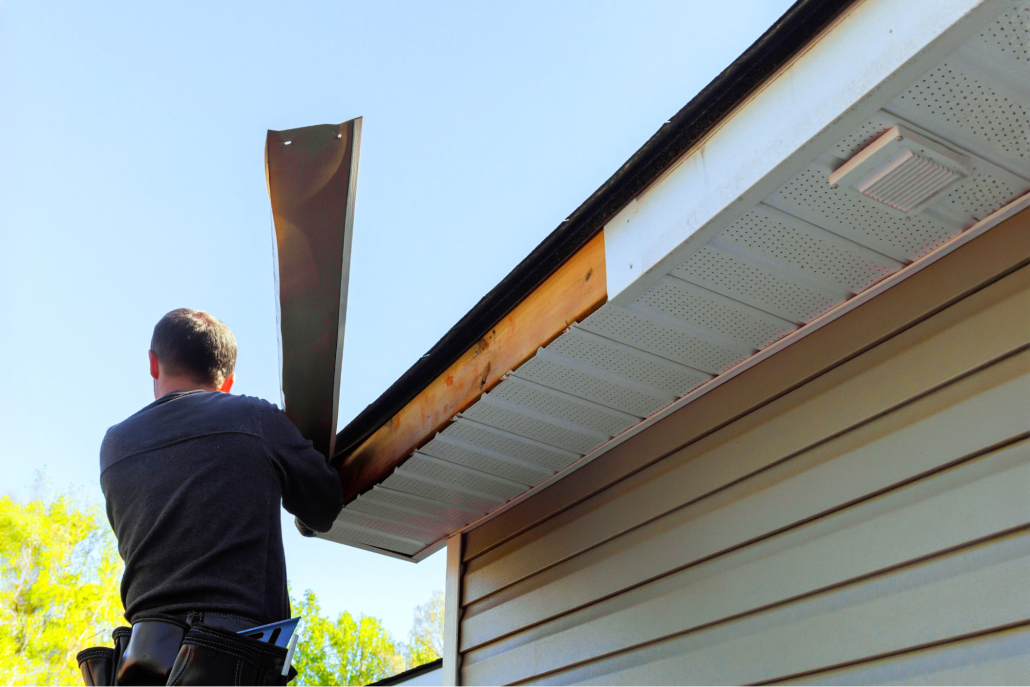
How Soffit and Fascia Repair Works With Gutter Maintenance
Your roof may get the spotlight when it comes to protecting your home, but the supporting cast—your soffit, fascia, and gutters—play equally vital roles. These often-overlooked components help ventilate your attic, protect your roofline, and guide rainwater safely away from your structure. When one element fails, it puts the entire system at risk. That’s why understanding how soffit and fascia repair works with gutter maintenance is key to preserving the structural integrity, appearance, and longevity of your home. What Are Soffit and Fascia? Soffit and fascia may not be as visible as your shingles or siding, but they play a critical role in protecting your roofline and supporting your gutter system. Before diving into repairs and maintenance, it’s essential to understand what each component does and how they work together. Soffit: Ventilation and Protection The soffit is the exposed underside of your roof’s overhang. It helps ventilate the attic and prevents moisture buildup inside your roofing system. Most soffits are made from aluminum, vinyl, or wood and are designed to allow airflow while protecting your rafters from weather and pests. If your soffit is damaged or clogged, attic air can stagnate, leading to mold growth, ice dams, and heat buildup. Fascia: Structural Support and Gutter Mounting The fascia is the horizontal band that runs along the edge of the roof where the gutters are attached. It serves as a support board for the lower edge of the roof and acts as a mounting surface for the gutter system. A compromised fascia board can weaken your gutter’s stability and lead to sagging leaks or complete detachment during heavy storms. The Connection Between Soffit, Fascia, and Gutters Your soffit, fascia, and gutter system work together as a unit to protect your home from water damage. When water isn’t properly channeled away due to clogged or broken gutters, it can overflow and saturate the fascia boards. From there, moisture can creep into the soffit and eventually into your attic. Likewise, if the fascia begins to rot or crack, it can no longer support your gutters, which then sag or pull away, worsening drainage issues. It’s a domino effect—when one piece fails, the others follow. Why Gutter Maintenance is Critical to Soffit and Fascia Repair Even a perfectly installed soffit and fascia system can fail if your gutters aren’t properly maintained. This section explores how clogged or damaged gutters directly impact the condition and longevity of your soffit and fascia. Preventing Water Overflow Clogged gutters overflow during heavy rain, sending water down the face of your fascia boards and into the soffit vents. This constant saturation causes wood rot, mold, and potential structural failure. Regularly cleaning your gutters—especially during fall and spring—keeps water flowing where it belongs. Reducing Ice Dams and Moisture Intrusion In colder climates, blocked gutters contribute to the formation of ice dams. When water freezes at the roof edge and can’t drain properly, it backs up under the shingles and into the soffit and fascia. Keeping gutters free of obstructions minimizes this risk and protects your home during winter months. Protecting Structural Integrity Even the best gutter system will fail if it’s mounted to a rotting fascia. When fascia boards degrade due to persistent moisture exposure, they lose their strength and can no longer hold the weight of the gutters—especially during storms or when filled with debris. Maintaining gutters helps support the longevity of the fascia boards and prevents premature failure. How Soffit and Fascia Repair is Done Repairing soffit and fascia involves more than just replacing trim boards—it requires careful assessment, proper tools, and coordination with the gutter system. Here’s a step-by-step look at how professionals approach the repair process to ensure long-lasting results: Step 1: Inspection and Damage Assessment The first step in any soffit and fascia repair is a detailed inspection. Contractors look for visible rot, warping, moisture damage, pest nests, and peeling paint. They may also check for signs of mold or attic ventilation issues. The condition of the connected gutter system is also reviewed to identify whether the root cause stems from poor drainage. Step 2: Gutter Removal and Protection Before repairs can begin, the gutter system is temporarily removed or safely braced to access the damaged fascia boards and soffit panels. In many cases, this step reveals hidden water damage or pests that weren’t visible during the initial inspection. Step 3: Replacing or Repairing Fascia Boards Fascia boards are removed and replaced if they show signs of rot, cracking, or separation. New boards are typically made from treated lumber, aluminum, or composite materials for increased durability. The new boards are sealed, painted, or capped with aluminum wrap for added weather protection. If only minor damage is found, patching or reinforcing the existing board may be an option. Step 4: Soffit Panel Installation Damaged soffit panels are removed and replaced with vented or solid soffit, depending on the home’s ventilation needs. New soffit material is installed snugly into place and sealed to prevent pest entry and moisture infiltration. Vinyl or aluminum soffits are often used as long-lasting, low-maintenance options. Step 5: Gutter Reinstallation and Alignment Once the soffit and fascia repairs are complete, the gutter system is reattached or replaced as needed. Proper pitch and alignment are checked to ensure water flows smoothly to the downspouts. Brackets and hangers are reinforced to guarantee secure mounting. Step 6: Final Sealing and Paint Touch-Ups Caulking, sealing, and painting are done to protect the new wood and provide a seamless appearance. Flashing may also be installed where necessary to divert water away from vulnerable seams and junctions. The Role of Gutter Guards and Covers in Soffit and Fascia Repair Gutter guards do more than keep leaves out—they help protect your soffit and fascia from water damage caused by clogs and overflow. This section explains how adding guards or covers can extend the life of your repairs and reduce future maintenance: Keeping Debris Out Installing gutter guards helps keep leaves, twigs, and roof grit from clogging your gutters. This simple